Welcome to the exciting and vivid world of video editing. Theright monitorcan be the bridge between raw footage and a cinematic masterpiece. With an array of options available, selecting the ideal monitor is crucial for editors whodemand precision,color accuracy, and seamless performance. This guide dives into the best monitors for video editing, highlighting the key features that set them apart in this demanding field.
ViewSonic VX1655 4K OLED 15.6 Inch Portable OLED Monitor
ViewSonic ColorPro VP2786-4K
Updated on Aug 01, 2025 by Marc Storch:Video editing isn’t just about having the latest and greatest tech at your fingertips. It is also about reliability. So, while there are some newer monitor options out there compared to what’s in this guide, they are not tried and true. At the end of the day, you want a monitor that can get you through a day of editing projects with no issues.
Game Rant’s Best Monitors for Video Editing
ASUS ProArt Display PA279CRV
The ProArt Display PA279CRV is a 27-inch 4K HDR monitor designed specifically for professional video editors and graphic designers. This display boasts a wide color gamut with 99% DCI-P3 and 99% Adobe RGB coverage and is factory pre-calibrated to Delta E < 2 for exceptional color accuracy. Plus, with the USB-C that offers DisplayPort support and power delivery of up to 96 watts, this monitor works well for laptop editors as well.
The Asus ProArt lineup has become a staple in the content creator community, and for good reason. Across the board, all ProArt monitors produce incredibly accurate colors at a reasonably affordable price point, and the ProArt Display PA279CRV is no exception. This monitor is perfect for editors on a bit of a tighter budget or editors just starting their editing journey who don’t need the highest caliber of monitor available.

The PA279CRV is not on the bleeding edge of display technology, but this monitor easily out-punches its weight class in multiple tests. With extensive color gamut coverage, 100 percent sRGB, 99 percent DCI-P3, and 98 AdobeRGB, this monitor beats out almost every other monitor in this category, even those with OLED panels. The Delta-E score of 1.4 is a bit higher than what Game Rant would like to see for more premium monitors, but again, the PA279CRV is much more accurate than many other monitors similarly priced.
Where this monitor does show its price a bit more is in the contrast and overall brightness. A peak brightness of 366 nits will not blow anyone away, especially when it comes to HDR, but for editors, it is more than suitable. As long as editors have decent control of the lighting in their environment, this shouldn’t present too much of a problem. Still, it might be best to check out brighter monitors for editors in bullpens or shared environments.

Dell S2722QC
The Dell S2722QC is a UHD USB-C Monitor lifestyle-inspired USB-C monitor with outstanding visuals that even the pros will be happy with. The IPS panel covers 99% of the sRGB color space, allowing users to see extraordinary colors from a wide viewing angle. Quickly charge and connect a laptop with USB-C connectivity and 65W of power delivery. This single-cable solution reduces cable clutter for a clutter-free desktop and simultaneously transmits power, video, audio, and data.
Even though the Asus ProArt PA279CRV is very affordable, editors who are looking for a monitor that is even friendlier on the wallet but still produces accurate enough colors for editing, the Dell S2722QC is a perfect choice. This 27-inch monitor combines a 4K IPS display with incredibly accurate colors and user-friendly connections like a single USB-C connection for display and power delivery to the laptop.

The S2722QC is more aimed at the general productivity crowd instead of specifically for content creators, but after taking a look at the color performance tests, it would be hard to tell. This monitor produces accurate enough colors for editors to feel confident color grading web-based content. However, unlike the PA279CRV, which produces accurate colors and covers pretty much the whole gamut of all three major color spaces, the S2722QC only covers 99% of sRGB color space.
This monitor really starts to shine after HDR mode is flipped on. HDR takes the measly 296 nits peak brightness in SDR mode to 411 nits peak brightness in HDR mode. While this does make viewing HDR content much more enjoyable unless the footage is intended for HDR delivery, this can cause some inaccurate colors in the final video. So ensure to turn off HDR mode when the edit does not call for it.
BenQ PD2725U Thunderbolt 3 Monitor
The BenQ PD2725U’s versatility and beautiful design will inspire whoever uses it. With 95% coverage of DCI-P3,100% coverage of the sRGB color space, and a Delta E ≤ 3, this monitor produces accurate colors whether you want to create for online use or print.
The BenQ PD2725U monitor has many great features that make it an excellent pick for professional video editing. The 27-inch monitor produces a vibrant 4K image with pixel density, making it easy to pick out the most minor details. For editors who want a bit of an upgrade over their first monitor, the BenQ PD2725U is a great way to upgrade color accuracy and image quality without spending too much.

The PD2725U covers a similar range to the ProArt PA279CRV, but with a slightly faster response time, this monitor handles faster motion much better. There is minimal artifacting and ghosting, even when quickly scrubbing through a timeline. Editors can feel confident when color grading with this monitor, knowing that everything will look similar regardless of the final delivery point.
Besides the excellent image quality, this monitor also has a picture-in-picture mode that is super useful for editing short-form vertical content. Whether editors are using Adobe Premiere, Davinici Resolve, or Final Cut, they are all not ideal for vertical content, so being able to float the program view in another window that has its own space makes it much easier to view what the video is actually going to look like while editing.

Apple Studio Display
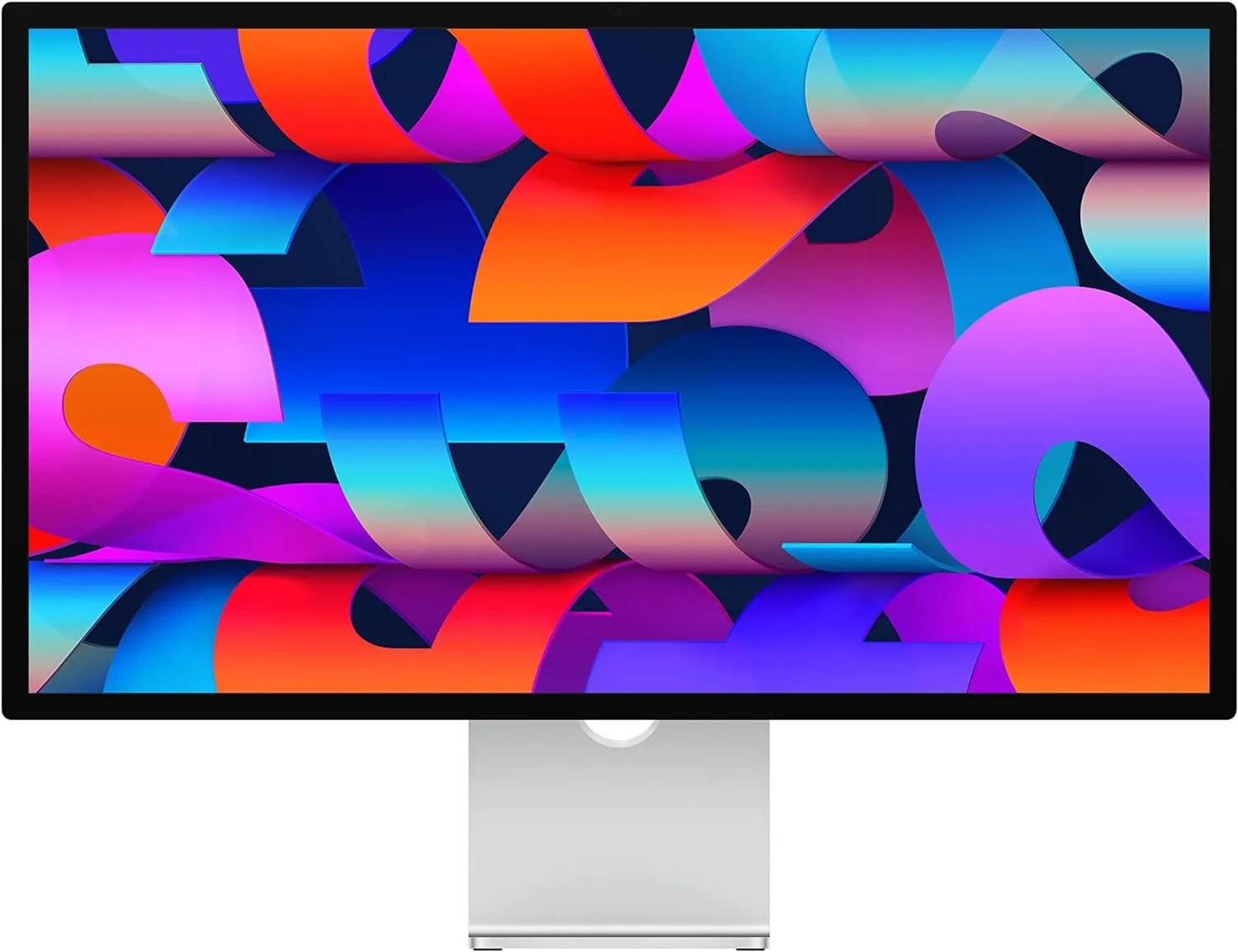
The Apple 27-inch monitor features a 5K Retina display with 5120 x 2880 resolution, 600 nits brightness, a 60 Hz refresh rate, and a 1 ms response time. It includes a 12MP camera, a six-speaker sound system with Spatial Audio, and connectivity options like Thunderbolt 3 and USB-C.
For many in the creative industry, especially in video editing, the go-to platform is macOS, and even though Apple has diversified into more niches, it still produces some of the most reliable premium products for content creators. The Apple Studio Display is perfect for pro editors who love the look of Apple displays and want to edit on one of the highest caliber monitors currently available.

Of course, this industry-leading monitor doesn’t come in at a super affordable price point, but it more than makes up for its hefty price tag with some of the best color performance from a monitor. With a 5K resolution on a 27-inch screen, this monitor is incredibly sharp; even when zoomed into footage, it is easy to pick out details. While the color coverage is not greater than the other monitors in this guide, at 98% coverage of DCI-P3, it supports way more reference modes, including NTSC, PAL, and Digital Cinema.
While this monitor is absolutely incredible in a light-controlled environment, unfortunately, the standard glass for this monitor is quite prone to reflections and glares. So, the standard glass should be fine for editors with a dedicated editing room. Still, the matte-finish display is definitely a better option for editors who have a window in their office.
LG 40WP95C-W UltraWide Monitor
The LG 40WP95C-W is a 40-inch UltraWide Curved WUHD monitor offering stunning visuals, Thunderbolt 4 connectivity, and built-in speakers for an immersive gaming and multimedia experience.
A couple of years ago, ultra-wide monitors for editing were all the rage. While they have fallen a bit out of favor for typical 16:9 or 16:10 displays, some editors still prefer an ultra-wide experience, and currently, there is no better option than the LG 40WP95C. This 40-inch monitor has plenty of space for editors to lay out their software of choice however they like and still have room for the timeline.
This monitor uses a fairly unique resolution with a height the same as a typical 4K monitor but a width that provides 33% more space. Despite the bigger size, this monitor is tack sharp, although the curve makes some text hard to read when it falls right into the curve’s apex. But that slight flaw is easy to overlook once users start editing; the additional space makes it so much easier to move quickly around the software.
Color-wise, the 40WPC95C has a pretty wide color gamut with 98% of the DCI-P3 color gamut and 100% of the sRGB space coverage. Plus, this monitor comes out of the box with impressive color accuracy, but the contrast leaves a bit to be desired. When viewing darker scenes in a dim room, they read more as gray instead of black.
This 15.6-inch 4K UHD (3840x2160p) OLED portable monitor with a 60Hz refresh rate and protective screen cover is perfect for gamers on the go, or anyone who travels for work and needs a second monitor. With a weight of 1.5 pounds and a thickness of 0.6 inches, this portable monitor slips easily into backpacks and even purses. The USB-C connectivity provides super-fast data, audio and video transfer, and 60W charging over one cable, making it easy to attach to just about any PC. This monitor also comes with a durable screen cover and a built-in stand for orientation in both portrait and landscape modes, again adding convenience to workers in hotel rooms or cramped convention halls. Plus, the monitor comes with a 3-year coverage!
A couple of years ago, portable monitors for video editing were always just for extra screen space instead of a color-accurate display. Now, thanks to the ViewSonic VX1655-4K-OLED, that is no longer the case. This tiny 15-inch monitor is a perfect addition to any editor looking to build a portable editing workstation without sacrificing performance.
The VX1655-4K-OLED only measures 0.6 inches thick and weighs a measly 1.5 pounds, but it produces absolutely stunning image quality that rivals full monitors. Regardless of the color gamut, this monitor covers the full range for all three and has support for 10-bit color depth. Until this point, portable monitors topped out at 8-bit; that slight jump allowed the VX1655-4K-OLED to display 1.07 billion colors.
Combining that with the fact that this monitor has a peak brightness of 400 nits editors on the go, heck, even editors who are looking for a program monitor for their desk can’t go wrong with the VX1655-4K-OLED.
The ViewSonic ColorPro VP2786-4K is a 27” professional monitor with outstanding visual performance and fantastic color accuracy. The integrated ColorPro Wheel provides easy and accurate color calibration for precise performance. Because of the certifications from Fogra and G7, users can rest easy that this monitor produces reliably precise color for both digital and print media. With fantastic design and an intuitive, user-friendly interface, the VP2786-4K delivers everything professional content creators demand in a monitor.
Editors needing the most accurate colors and a monitor they can rely on definitely need to check out the ViewSonic ColorPro VP2786-4K. This monitor has some of the highest color gamut coverage currently available, and it also comes with a ColorPro wheel that acts as both a calibrator and macro pad.
Anyone who has looked at picking up a color calibrator like the DataColor or X-Rite knows they are not a cheap investment. So, the fact that ViewSonic includes one that also can act as a macro pad is incredible. This allows editors to know that their display is showing accurate colors regardless of the room they are using the monitor in.
But the included color calibrator wouldn’t mean much if the monitor didn’t hold up. Luckily, the VP2786-4K definitely gets the job done; not only does this monitor have incredible color gamut coverage, but it is also ridiculously accurate out of the box. While ViewSonic claims the Delta-E is <2, tests have shown the delta-E as low as 0.71; and that’s right out of the box!
How to Choose the Best Monitor for Video Editing
Selecting the right monitor for video editing involves considering several key factors to ensure the final visual output is precisely as intended. Let’s check these essential elements out.
Color Accuracy
Color accuracy is paramount in video editing, as it directly impacts the authenticity and quality of the final product. Monitors with high color fidelity provide true-to-life colors, ensuring what editors see is an accurate representation of their work.
Resolution and Size
Resolution and screen size play critical roles in video editing. High-resolution, larger monitors offer more workspace and allow finer details to be seen, making it easier to edit accurately and reducing strain during long editing sessions.
Connectivity Options
The variety of connectivity options a monitor offers can significantly influence an editor’s workflow efficiency. Monitors with multiple ports enable seamless integration with various devices, essential for a flexible and adaptable editing environment.
Consider the panel type
A monitor that features an IPS panel is the best for users who are looking for great contrast, excellent color accuracy, and wide viewing angles. The monitor should also cover a wide color space like sRGB or Adobe RGB.
FAQ
Q: Can I use a gaming monitor for video editing?
Gaming monitors can be used for video editing, especially if they have high resolution and color accuracy, but they may lack certain professional-grade features.
Q: Are curved monitors good for video editing?
Curved monitors can offer a more immersive experience and reduce eye strain, but flat monitors are typically preferred for accurate image reproduction.
Q: Is screen size important for video editing monitors?
Yes, larger screens provide more workspace and make it easier to see fine details, enhancing the editing process.
