Every science fiction fan has thought about cybernetic prostheses. What mechanical add-on is so enticing that you’d cut off your own hand to have it? Whether it’s weapons, tools, and versions of the same limb with wildly increased physical capabilities, anything is possible with the right surgeon. However, sci-fi authors dare to ask whether that new limb changes the essential nature of its user.
Moststories dealing with cyborgsare about identity. Are we our bodies? How much flesh and bone can we shed before we aren’t the same being anymore? Do you have to give something up to get something new attached? When we’re playing Ship of Theseus with the cells that contain our consciousness, we bring up some difficult questions.

RELATED:The Cyberpunk Sci-Fi Subgenre Explained
The Cybernetics Eat Your Soul trope concerns the tendency of sci-fi stories to portray a mental cost to every new augmentation. A character might replace half of their physical mass, or three-quarters, or everything but their brain and theirspinal cord with cybernetics, but they won’t do so without consequences. Most cyberpunk stories introduce some sort of cyber-psychosis that results in madness for its victims. There are a few reasons to introduce this trope. It’s a limiter on power because every sensible character will know better than to risk losing their sanity. It’s a way to explain why a lot of real people might become dangerous feral enemies. But, perhaps most importantly, it’s a clear commentary on humanity. If a character chooses to trade in their skin for metal, they’re abandoning the signifiers that make them a person in the audience’s eyes. The implications can be hugely unpleasant, given the necessity of real-life prosthesis, but the trope’s prevalence makes a lot of sense.
There are two ways that the cybernetically enhanced can be affected by the trope. Either they become numb and robotic, leaning into efficiency at the cost of empathy, or they flip out and become dangerous psychopaths. It’s the two go-to extremes of pop-culture mental illness. This trope developed from a fairly modest origin. The cyberpunk fiction genre developed in the late 70s and early 80s, around the same time astabletop role-playing games. Most of these stories didn’t feature any elements of cybernetic enhancement causing inhumanity in their users. However, the makers of TTRPGs did need a reason that players couldn’t just load their characters down with killing tools. They landed on a solution that provided them with a hard power cap and an easy cast of powerful enemies. The most influential version of the concept is undoubtedly still MikePondsmith’s 1988 gameCyberpunk.
Cyberpunkwas pretty bold in the way it took an entire subgenre as its name. Somehow, 35 years after its initial release, it has finally earned that name by becoming most people’s go-to point of reference. The game’s version of this trope is called Cyberpsychosis, and it has changed a lot across iterations and adaptations. In the early days, it was purely mechanical. Enhancements that made the character more effective in combat also increased their Cyberpsychosis, creating a cost for anything too powerful. Explanations have varied. Initially, it was the combined effect of body dysmorphia and the gradual inability to relate to unaugmented humans. It has since been downplayed, with CD ProjektRed’sCyberpunk2077suggestingthat the term is a messy label used by corporations to excuse a wide variety of other issues.Edgerunnersgoes back and forth with the concept, implying that there definitely is a mental load associated with chrome, but that most victims suffer from something unrelated as well. It’s a messy concept, butCyberpunkis probably the origin point for the trope.
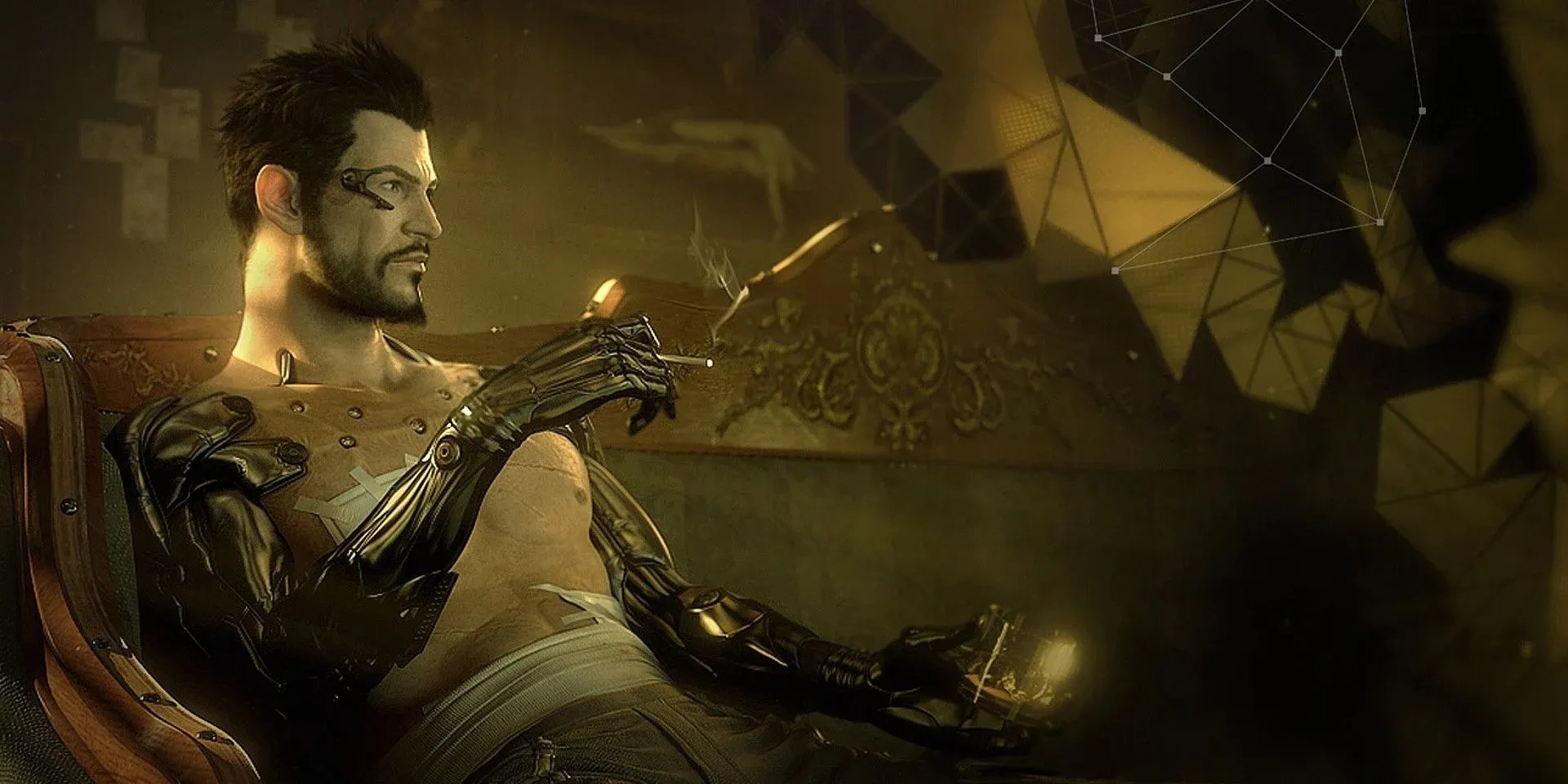
Outside that franchise, tons of other sci-fi works have played with the idea of a mental cost to physical enhancements. Sam Raimi’sSpider-Man 2changed Dr. Otto Octavius’s backstoryand gave him a hint of this trope with several scenes of his robotic arms speaking to him. Star Wars uses cybernetics as a visual signifier for evil but doesn’t demonstrate the actual augmentations affecting anyone’s mental capacity. While the titularRobocopdoesn’t suffer from any ill effects, the second film shows off some much messier models. The world of video games plays with this idea all the time. TheArmored Corefranchise introduces cyborgs with and without negative side effects. Perhaps the worst example in the modern era is the long-awaited prequelDeus Ex: Human Revolution, in which the player’s decisions can lead to the game omnisciently and canonically stating that cybernetics absolutely do eat souls. The game’s writing fumbles the context so horrifically that even prosthetic limbs and replacement organs are implicated.
The idea of replacing one’s limbs with cybernetics causing some ill effects isn’t absurd, but every creator in the genre has to walk a fine line with the concept. What used to be a power-limiting gameplayconvention in TTRPGs hasbecome one of the most central tropes in cyberpunk fiction. It’s a difficult trope to do right, but there’s a reason it has stayed around.
